| Date | August 12, 2024 |
| Event | Asteroid impact on the Moon |
| Casualties | None |
| Visibility | Visible from North America during total solar eclipse |
| Significance | Highlighted need for improved monitoring and defense against near-Earth objects |
| Asteroid size | Approximately 50 meters in diameter |
| Impact effects | Large explosion, significant scientific interest and public fascination |
| Impact location | Lunar surface |
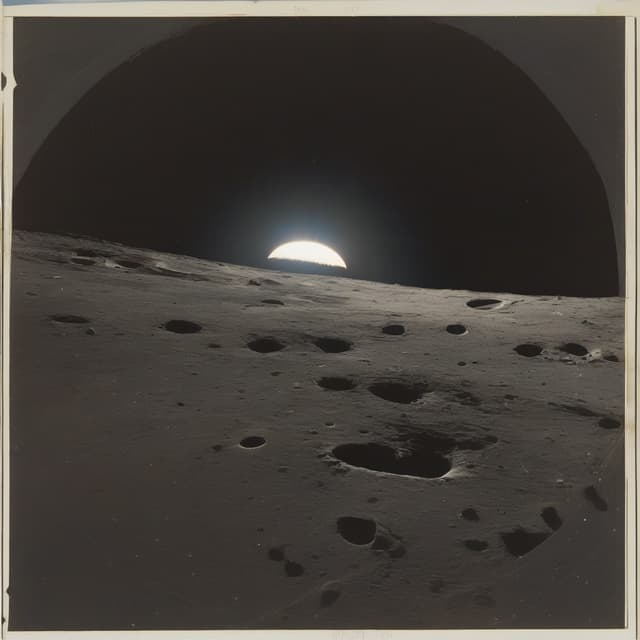
On August 12, 2024, during a highly anticipated total solar eclipse visible across much of North America, a previously undetected asteroid roughly 50 meters in diameter struck the surface of the Moon. The dramatic impact, which occurred just over an hour into the eclipse, was captured on camera by countless skywatchers and astronomical observatories across the continent.
As totality began, reports quickly emerged of a sudden bright flash visible on the lunar surface, followed by an expanding plume of debris. Initial speculation ranged from the possibility of a volcanic eruption on the Moon to some kind of unexplained celestial phenomenon. There was widespread confusion and even panic, as the event did not fit any known patterns of lunar behavior.
It was not until several hours later, once astronomical data could be thoroughly analyzed, that the true nature of the event became clear. Detailed observations from satellites, telescopes, and radar systems confirmed that an asteroid approximately 50 meters wide had impacted the lunar surface at high velocity, creating an explosion visible from Earth.
Once the initial confusion subsided, the scientific community quickly shifted into high gear to study this extremely rare and unexpected celestial event. Orbital data was used to backtrack the asteroid's trajectory, revealing that it had originated from the asteroid belt between Mars and Jupiter. Further analysis showed that the object had been on a collision course with the Moon for several years, but had gone completely undetected by Earth-based monitoring systems.
Geologists and lunar scientists scrambled to model the impact crater and assess any potential changes to the Moon's surface features and dynamics. There was intense interest in understanding the composition of the impactor and the force of the explosion, which was estimated to be equivalent to several kilotons of TNT.
While the lunar impact caused no direct harm to life on Earth, it did trigger a global response and reignited concerns about the potential threat of near-Earth objects. Calls were made for significant increases in funding and capabilities for detecting and tracking potentially hazardous asteroids and comets.
Some political leaders even raised the possibility of developing advanced planetary defense systems, such as kinetic impactors or nuclear interceptors, to deflect or destroy potentially dangerous objects before they could impact a populated area. However, these proposals were met with significant ethical and technical challenges.
More broadly, the 2024 lunar impact event served as a stark reminder of the unpredictability and fragility of the cosmic environment that humanity inhabits. It sparked renewed scientific interest in understanding the dynamics of the solar system and the potential risks posed by the vast array of objects orbiting the Sun. Even years later, researchers continue to analyze data from this dramatic celestial occurrence in the hopes of unlocking new insights about the formation and evolution of our planetary neighborhood.
